Local detail
What It Costs
We won't quote a number here without seeing the opening - door width, headroom, and what's already on the track all move the price, and giving you a flat figure before that would be a guess dressed up as a fact. What we can tell you is what shapes the cost in this area specifically. A lot of Attleboro houses were built between 1938 and 1994, with most of that stock going up in the 1960s and 70s. Doors from that era were rarely insulated, and replacing one here usually means moving to a door built for a severe cold climate band, which costs more than a bare steel slab but holds up to what this area actually sees every winter. If the opener is original too, that's a second line item, not a maintenance add-on. One honest limitation: insulated sections in some styles run on longer lead times than a basic uninsulated panel, so if your spring lets go in January, don't expect same-week stock on every option. We'll tell you up front if your size or style has to wait.
The area
The Problem
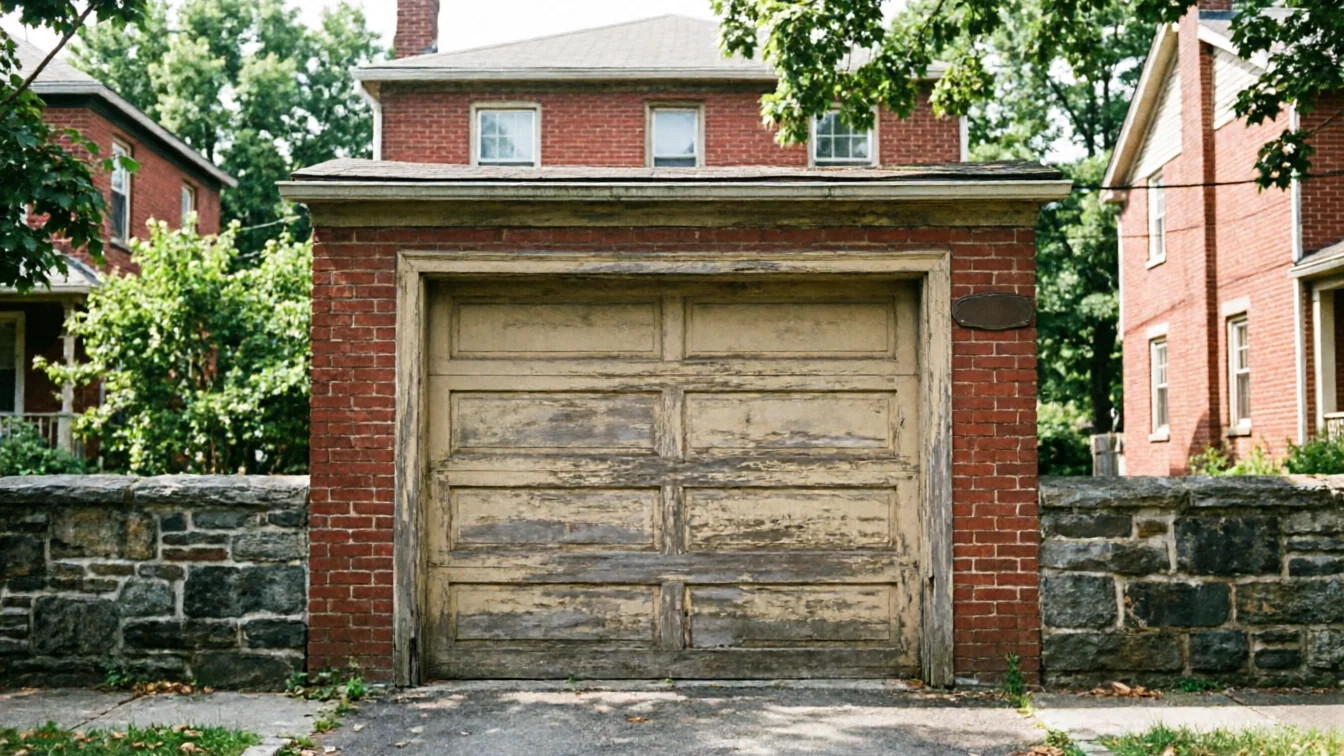
The doors original to this housing stock were built for a different set of expectations than the ones we have now. A door put in during the 1960s or 70s went up before insulation requirements tightened and before torsion hardware was standardized the way it is today. That means a lot of garages in town still run one-piece or early sectional doors on side-mounted springs sized for hardware nobody stocks anymore. When a cable frays or a spring fails on one of these, a repair tech isn't always pulling a part off the truck - sometimes the fix is a full replacement because the original parts simply aren't made. That's not an upsell; it's what happens when a door outlives the supply chain built around it.
What we find
Leaving It Alone
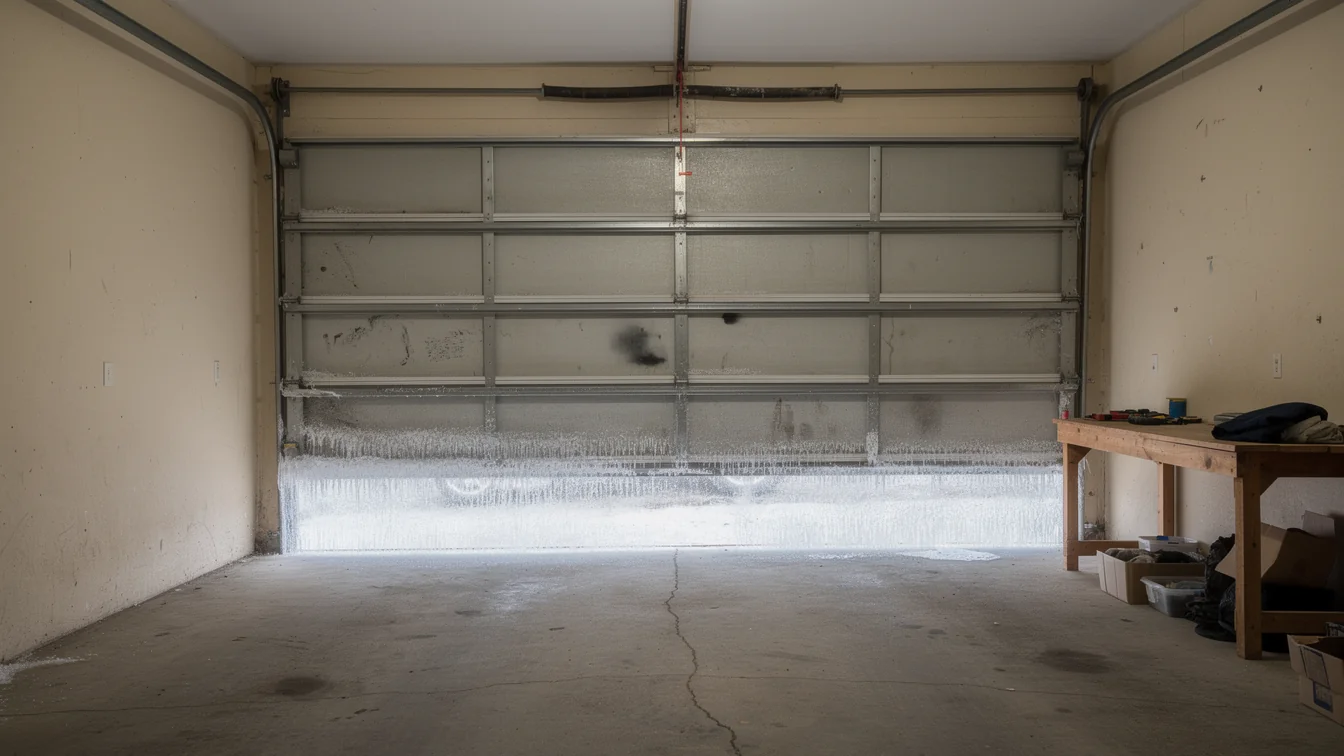
A door that's warped, off its track, or missing a panel doesn't fail quietly in a cold-climate severe zone like this one. Steel contracts hard in a deep freeze, and a door that's already out of alignment tends to bind, then jump track, right when the temperature drops - which is exactly when you don't want a garage door stuck half open. Left alone, a weak spring under cold-weather load doesn't get safer with time; it gets closer to letting go, usually under tension, usually without warning. Across the wider area, with over 100,000 owner-occupied houses carrying roughly the same vintage of door, this isn't a rare scenario - it's a predictable one tied to how old the stock is and what the winters here do to it. Waiting doesn't save the door. It just moves the failure to a worse night.
How we work
What Local Conditions Do
A severe cold climate band puts steel and wood through real expansion and contraction every season, and a door built in the 1960s or 70s wasn't engineered with today's thermal cycling in mind. That stress shows up as panel warp, loosened fasteners, and springs that fatigue faster than their rated cycle count would suggest. With most of the area's housing built between 1938 and 1994, and the bulk of it clustered in that mid-century stretch, a huge share of doors in town are aging into failure at roughly the same time, for roughly the same reason - hardware that was fine for the climate expectations of its decade and isn't holding up to the swings we get now. That's the core of why replacement timing matters more here than a generic maintenance schedule would suggest.
Talk to a local pro
Garage door trouble in Attleboro?
Same-day service with honest, upfront quotes.