Local detail
What It Costs
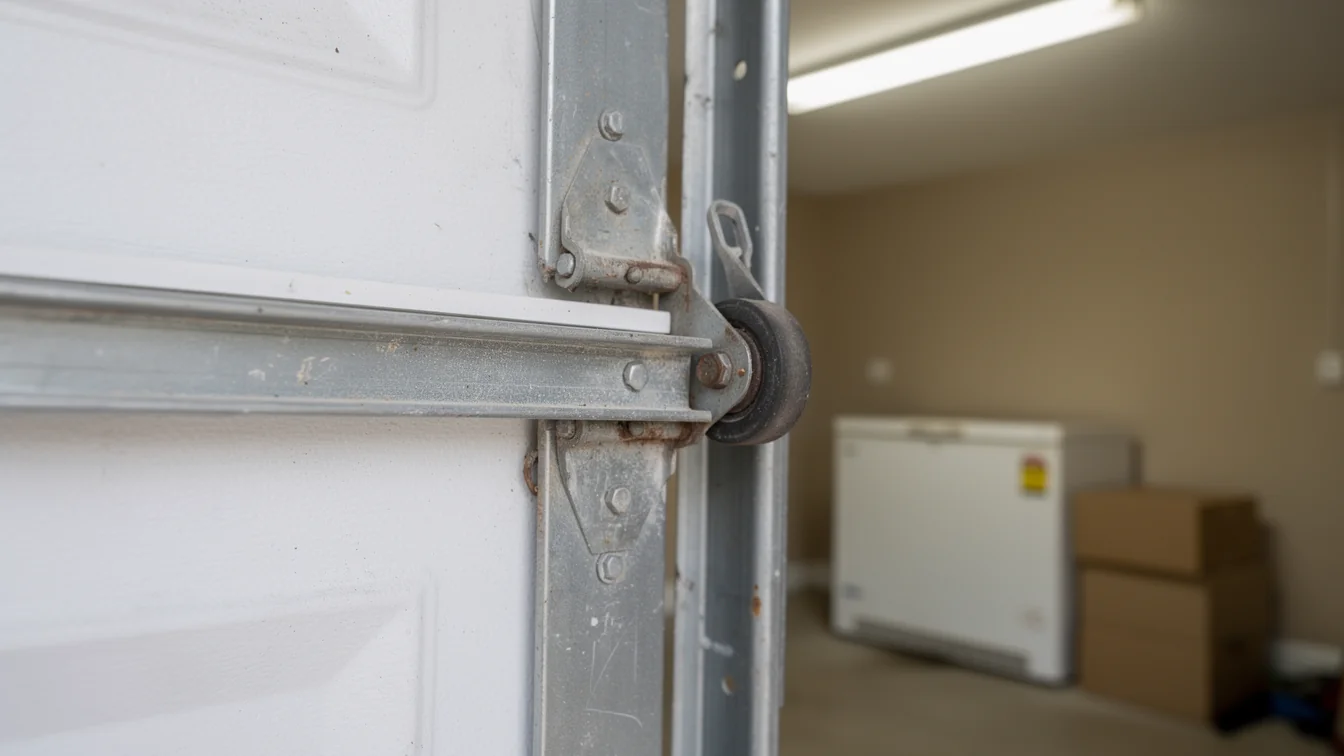
We don't post a flat number here because what you pay depends on what's actually wrong, and in Attleboro that varies more than most places. A lot of the housing stock in this area went up between 1938 and 1994, with the bulk of it from the 1960s and 70s. That means tracks and rollers sized to doors that aren't made anymore, which can turn a simple realignment into a parts search. If the track itself is just bent or the brackets have worked loose, that's a shorter job. If the rollers are worn metal-on-metal (common on original hardware from that era) and the track has play in the mounting, you're looking at hardware replacement on top of the realignment. Cold weather adds a variable too: a door that's off track in January because grease has stiffened behaves differently than the same door in July, and sometimes what looks like a track problem is really a spring that's lost tension in the cold and is letting the door travel unevenly. We'll tell you straight if it's a quick fix or if you're better off replacing the track assembly rather than patching it, because patching old track hardware on a door this age sometimes just moves the failure point a few months down the road.
The area
The Problem
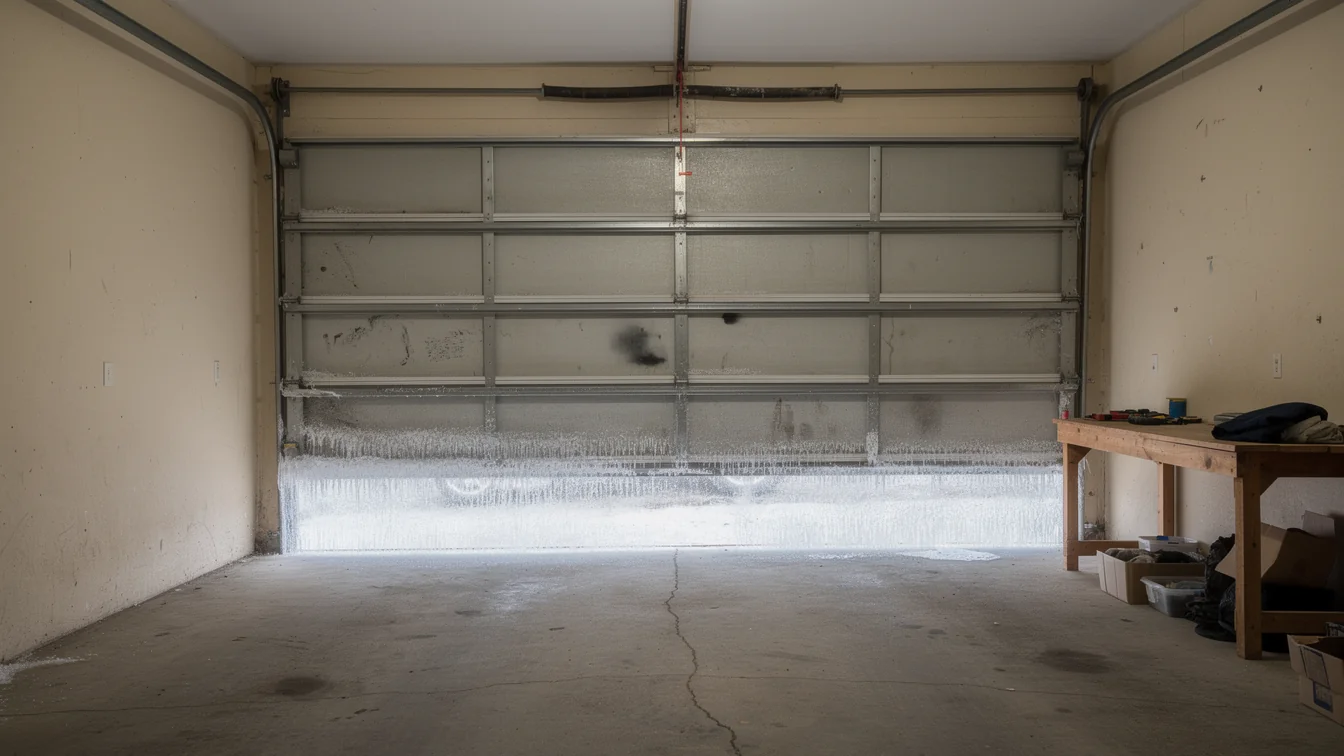
A door goes off track for one of a few reasons, and in this area the two most common are worn rollers on original hardware and a bent track from an impact or from hardware pulling loose over time. Houses built in the 1960s and 70s often still have the steel track that came with the house, and after decades of use the roller stems wear, the track rail develops a slight bow, and the door starts riding at an angle instead of straight up and down. You'll notice it as a grinding sound, a door that jumps or catches a few inches up, or one side lifting faster than the other. Severe cold makes it worse. When temperatures drop hard, the lubricant in the rollers thickens and the metal track itself contracts slightly, which can be enough to turn a marginal roller-and-track fit into one that binds and jumps the rail. We also see it after a spring loses tension unevenly on a double door, where one side is doing more lifting than the other and the imbalance walks the panel off the track over repeated cycles.
What we find
Leaving It Alone
A door that's partway off track doesn't fix itself, and running it again to "see if it clears" is how a bent track becomes a torn panel. Each cycle the door makes while misaligned grinds the roller stem further and puts load on a cable or hinge that isn't designed to carry it. On an older door with original hardware, that extra stress tends to find the weakest link fast, often a cable fraying at the drum or a hinge cracking where the panel's already thinned from age. We've also seen the opener take the hit; it keeps trying to pull a door that's binding, and the gearing or the trolley connection wears out well before it should. Once a door comes fully off the rail, you're not looking at a tune-up anymore. You're looking at a door that may have to come down to reset, and depending on the panel and track condition, that can mean replacing pieces that a $40 roller swap would have prevented a month earlier.</p>
How we work
What Local Conditions Do
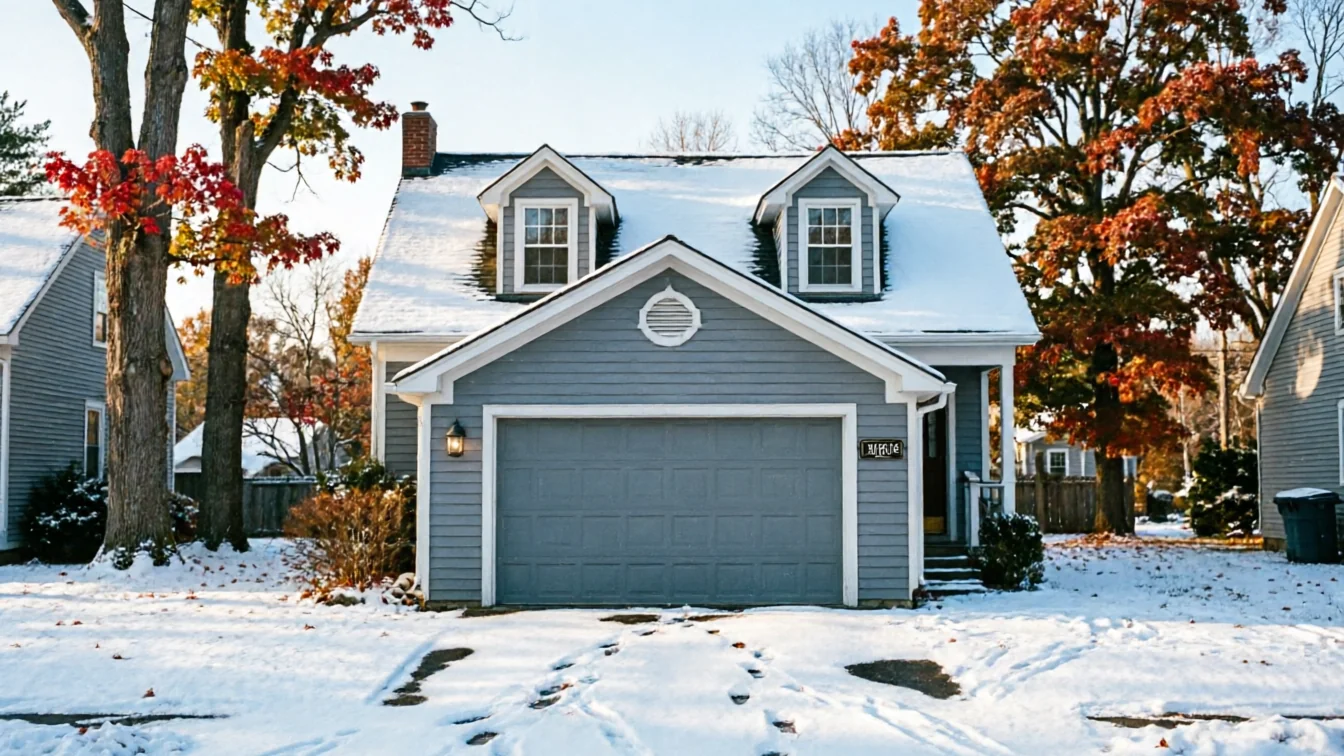
Two things about this area matter more than most homeowners realize. First, the age of the housing: with median construction around 1975 and most stock from the 1938-1994 range, a large share of doors in Attleboro and the surrounding towns are running on hardware that predates modern nylon rollers and sealed bearings. That hardware wears into misalignment slower but more permanently than newer parts, and it doesn't self-correct. Second, this is a severe cold climate, not just an occasional cold snap. Repeated freeze-thaw cycles work on steel track mounting the same way they work on foundations: fasteners loosen a fraction at a time, brackets shift, and a track that was square in October can be a sixteenth of an inch off by February. On an older door that's already riding on worn rollers, that small shift is often the difference between a door that runs quiet and one that jumps the rail on a cold morning.</p>
Talk to a local pro
Garage door trouble in Attleboro?
Same-day service with honest, upfront quotes.