Local detail
What It Costs
We don't post a flat number because what a call covers in Attleboro depends on what's behind the panel, and that depends a lot on when the house went up. Most homes here date to between 1938 and 1994, with the typical build year landing around 1975, so a tech is usually working on original or first-replacement hardware - torsion springs wound for a lighter door, tracks sized before insulated steel panels became standard. A service call always includes the diagnostic: pulling the panel, checking spring wind and cable tension, testing the opener's force settings, and inspecting the track alignment. From there, cost splits into parts and labor, and parts vary because a 1962 door and a 2005 door don't share hardware. What it doesn't cover: structural carpentry if the frame has rotted, or a full opener logic board swap if the unit is beyond its service life - those get quoted separately once we're inside the door and can see what we're dealing with.
The area
The Problem
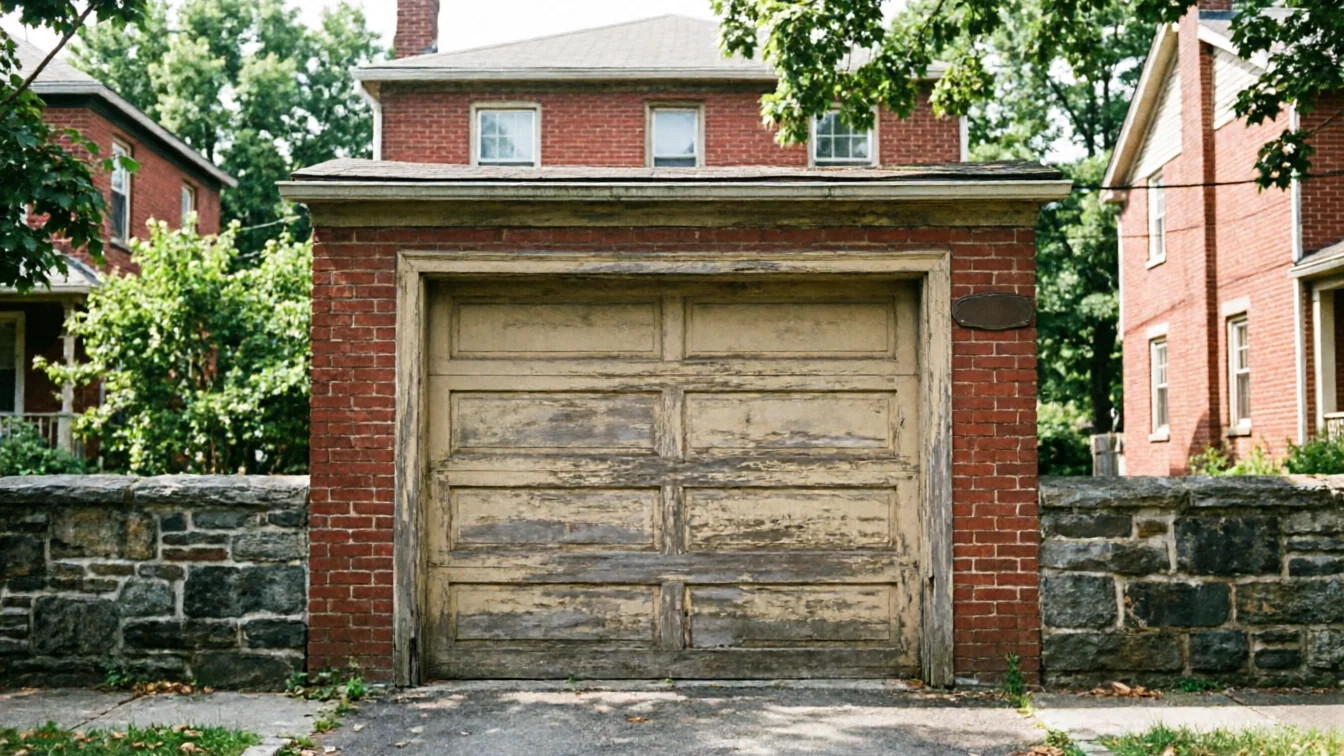
The houses across this part of the service area - spanning 41 named neighborhoods, most built through the 1960s and '70s - were fitted with garage door hardware designed for a lighter, single-layer door and a mild duty cycle. Decades on, that same torsion spring is still carrying a door that's often been upgraded to heavier insulated steel, which shortens spring life and loads the cable drums harder than they were sized for. Add Attleboro's cold climate, rated severe for winter design loads, and you get grease that thickens below freezing, rollers that bind on frosted track, and springs that lose temper faster from repeated freeze-thaw cycling. The common failure isn't dramatic - it's a spring that finally lets go on a January morning, or a cable that frays because it's been running dry since a lube job that never happened. None of this is a defect in any one door. It's what happens when 1970s-era hardware meets fifty winters.
What we find
Leaving It Alone
A door that's sticking, grinding, or closing unevenly on an older Attleboro house usually isn't going to fix itself, and cold weather speeds up the failure rather than slowing it. A torsion spring under extra strain from a heavier panel doesn't give you much warning - it holds until it doesn't, and when it goes, the door can drop hard enough to bend the track or snap a cable at the same time, turning a single-part fix into a multi-part one. Rollers running dry on a frosted track wear the track edge, which is cheap to lube and expensive to replace. We've seen the math run the other way on doors old enough that patching one component just shifts the load to the next weak point. At some point on a door from the 1960s-70s stock that's this common here, a full hardware upgrade costs less over five years than three separate emergency calls.
How we work
What Local Conditions Do
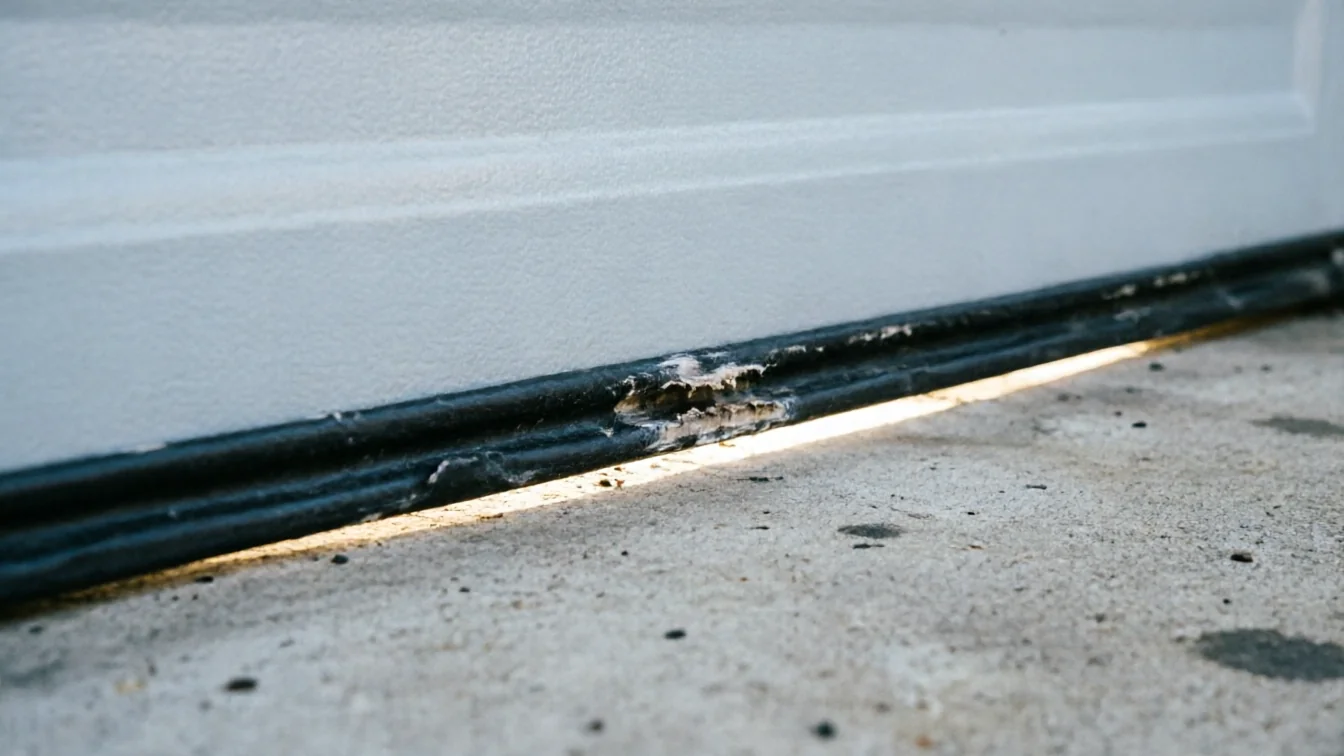
Attleboro's housing stock and its climate work on a garage door together, not separately. With most homes built between 1938 and 1994 and median household income in the service area at $121,458, we see two patterns: owners who want the original door kept running as long as possible, and owners who move straight to replacement once a major part fails, because the math favors it. Either way, the severe cold-climate rating means a service call here almost always includes checking the bottom seal for cracking, the spring for cold-weather fatigue, and the opener's cold-start force setting - three things that matter less in a milder climate but matter every winter in this one. The service area reaches from North Seekonk and Plainville a few miles out to Walpole and Medfield further north, and the hardware age pattern holds across most of it, since the building boom that shaped this part of the region happened on roughly the same timeline everywhere in it.
Talk to a local pro
Garage door trouble in Attleboro?
Same-day service with honest, upfront quotes.