Local detail
What It Costs
We can't hand you a number before we see the door, and anyone who does is guessing. What we can tell you is what drives the cost up or down. Most of Attleboro's garages sit in houses built between 1938 and 1994, with the median build year landing around 1975, so a lot of original torsion hardware is still in service here. A single worn roller or a loose hinge is a cheap fix on any door, any age. But a spring, drum, or cable that's original to a 1975 build usually isn't sold in isolation anymore - the shaft diameter and drum pitch from that era don't match current stock sizes, so the job becomes a full torsion conversion instead of a part swap. That's a bigger bill, and we'll tell you straight if that's where your door is headed before we start. In a city like Attleboro, where the median household income runs around $121,458, a full torsion conversion is a bigger decision than a forty-dollar roller swap, and we'd rather you make that call with the real picture than get surprised partway through.
The area
The Problem
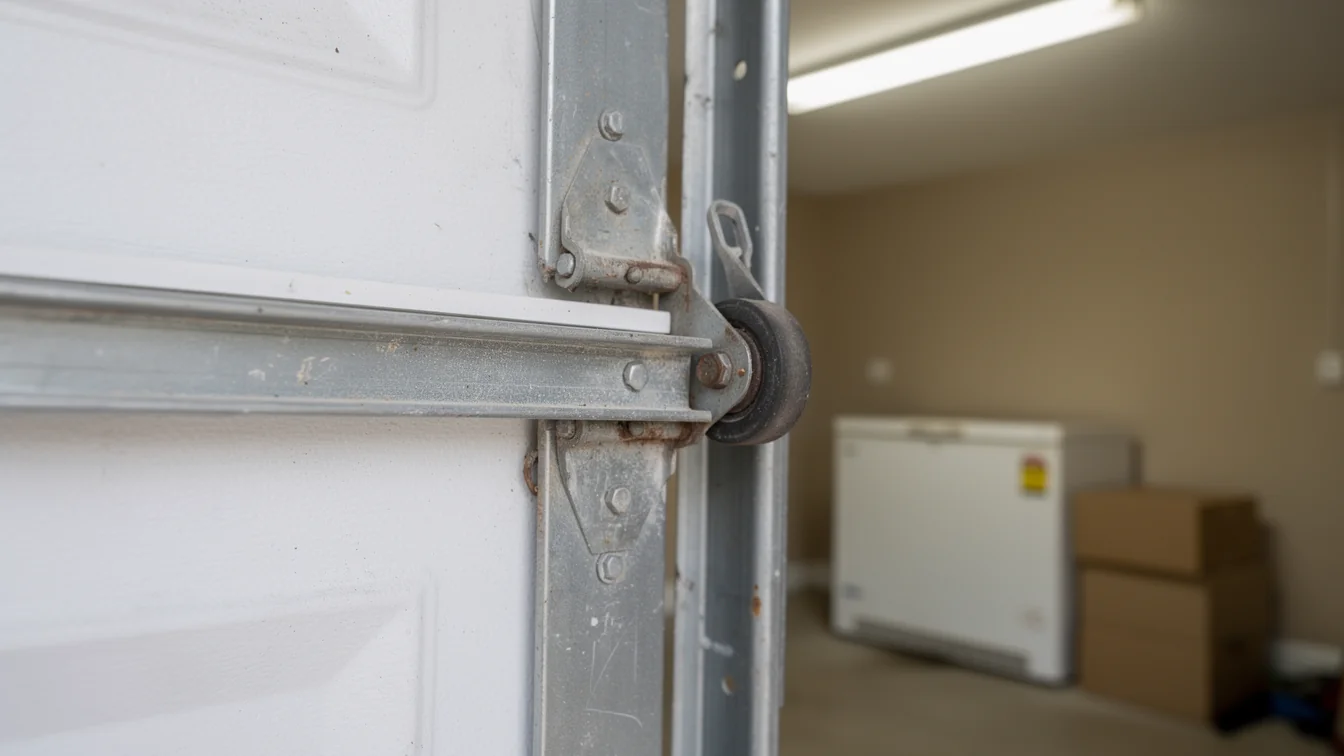
The noise is the hardware telling you something is loose, dry, or worn past tolerance, and which noise you hear usually narrows it down. A rhythmic thump once per rotation is almost always a flat spot on a roller. A sharp bang, usually once, is a cable snapping or a spring letting go - if that's what you heard, don't run the opener again until someone looks at it. A grinding or scraping sound as the door travels is metal on metal where a bearing or roller has worn through its coating, which is common on doors this old. A high-pitched squeal on a door lift is usually the torsion spring itself, dry and working harder than it should. Across the 41 named areas that make up the Attleboro service footprint, most of the stock is 1960s and 70s construction, not newer builds, so these are the noises we hear on repeat calls - not odd one-offs. An opener motor that groans before the door even moves is a gear set wearing down inside the housing, and on an opener that old, that's frequently a replace-the-opener conversation rather than a repair one.
What we find
Leaving It Alone
A noise you ignore on a garage door doesn't stay a noise. A flat-spotted roller keeps hammering the track every cycle until it chips the track rail or knocks the door out of alignment. A dry, squealing spring is a spring winding down toward failure, and torsion springs don't warn you twice - they work, then they don't, usually under load, which is the worst moment for a cable or spring to let go. Attleboro falls in a cold, severe climate band, and that kind of temperature swing is what fatigues a 1970s-era spring faster than it would in a milder place, since the metal is already stressed by decades of cycling before winter adds contraction on top of it. A grinding bearing left alone will eventually seize, and a seized bearing under spring tension is how a cable jumps its drum. None of these get quieter or cheaper by waiting. The honest exception: a hinge pin that squeaks but still holds true can wait for your next oil can pass. That one's genuinely low stakes. The spring, the cable, and the bearing are not.
How we work
What Local Conditions Do
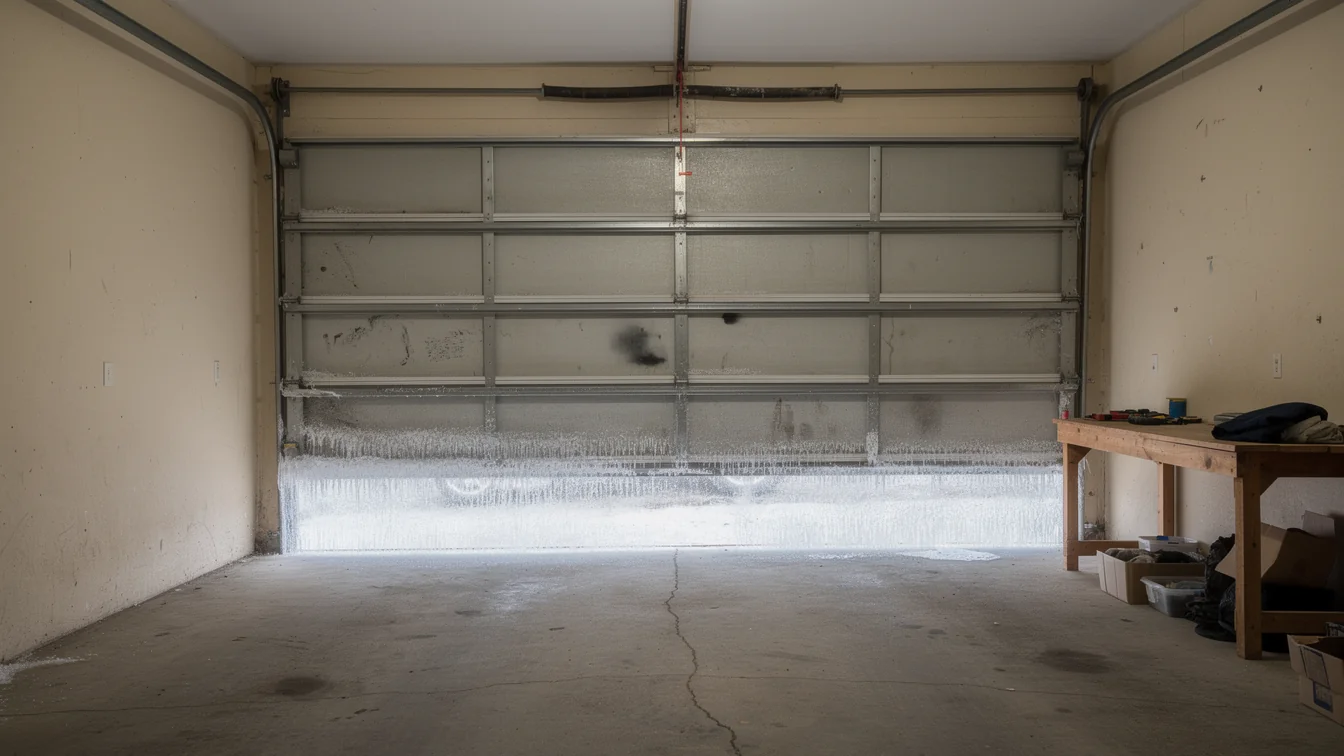
Cold, severe winters do two things to a garage door that a moderate climate doesn't. First, they thicken whatever lubricant is on the hardware, so a spring or roller that was already marginal starts dragging and making noise it didn't make in October. Second, the metal itself contracts in the cold, which tightens tolerances on parts that were already sized for a 1960s or 70s-era shaft, and a tight tolerance on a worn bearing is exactly when you hear the grind. An Attleboro garage with its original opener from the 1970s building boom is running gearing that nobody machines new parts for anymore, and cold makes the aged grease inside that gearbox thicker and the motor work harder to turn it - that's the groan you hear before the door lifts. We see this pattern across the older stock from North Attleborough Center to Norton Center, wherever houses from that same construction era sit. It's not a flaw in any one house. It's what forty-plus winters do to hardware that was never meant to last that long without attention.
Talk to a local pro
Garage door trouble in Attleboro?
Same-day service with honest, upfront quotes.