Local detail
What It Costs
We don't post a flat number here because the honest answer depends on what's actually wrong, and on this kind of door that's rarely one thing. Houses across this service area were mostly built between 1938 and 1994, with the thickest band going up in the 1960s and 70s. A door that age usually has its original torsion spring, original hinges, and an opener that's outlived its warranty by decades. Replacing one worn roller is a small job. Replacing a spring on a door that's also got rusted cable and a bent track is a bigger one, and a tech won't quote the first without looking at the other two.
With 100,876 owner-occupied houses in this area and a median household income of $121,458, most calls are homeowners paying for the repair themselves, not a landlord deciding whether it's worth it. That changes the conversation - owners here tend to ask for the repair that lasts, not the cheapest patch. One honest limit: we don't carry parts for every obsolete chain-drive opener from the 1970s and 80s. Some of those need a full replacement because the part simply isn't made anymore, and a tech will tell you that up front instead of promising a fix that won't hold.
The area
The Problem
Most doors we get called on in this area aren't failing because of bad luck. They're failing because the hardware is the age of the house, and the house is old. With housing stock here running from 1938 up through 1994 and the bulk sitting in the 1960s and 70s, a technician's first move is almost always to check the spring - because a door installed when the median home here was built, around 1975, is sitting on springs that have gone through close to fifty years of winter cycles.
Across the 41 named areas that make up this territory - from Attleborough Falls three miles out to places like Middleborough Center nineteen miles east - the housing age doesn't shift much from one side to the other. That means the same failure pattern shows up everywhere: original torsion springs past their rated cycle count, side-mount hardware that's harder to source than center-mount, and openers with gear sets that were never designed to run this long. The spring gets checked first because on a door this old, it's usually already stretched past where it should be, and a stretched spring puts extra load on everything downstream of it - the cable, the drum, the opener motor trying to compensate.
What we find
Leaving It Alone
A spring that's past its cycle life doesn't usually announce itself. It gets a little stiffer, the door closes a little harder, and then one day it lets go - often on the coldest morning of the year, because cold metal is brittle metal, and this area sits in a cold-severe climate band. When a spring snaps under load, it doesn't just strand the door open or shut. It can snap the cable with it, and a cable under tension is not something you want near your hand or your car's windshield.
The part people underestimate is what an old, strained spring does to the opener. The motor on a 1980s or 90s unit was built to lift a door with a spring doing most of the work. When that spring is weak, the motor starts doing the lifting instead, and motors aren't built for that load long-term. We've seen openers burn out early simply because nobody replaced the spring that was supposed to be carrying the weight. Waiting usually doesn't save money - it just moves the bill from one part to two.
How we work
What Local Conditions Do
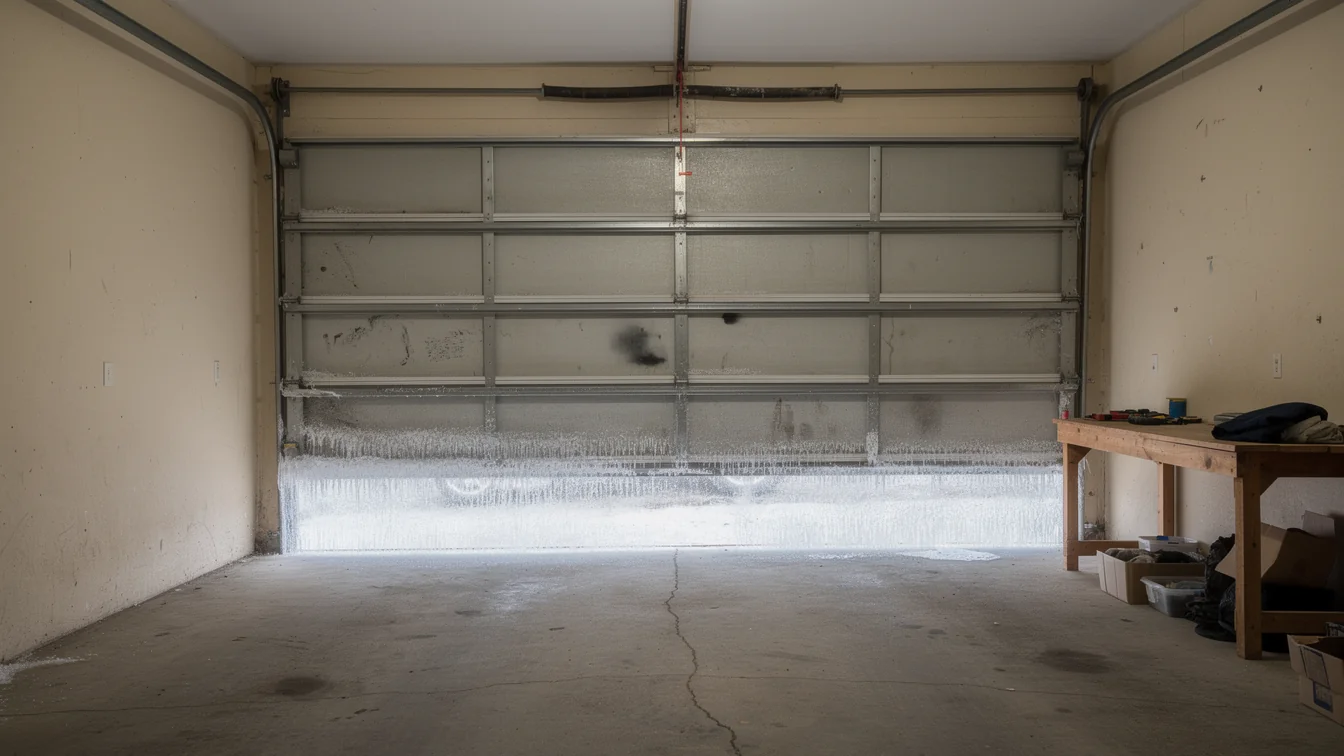
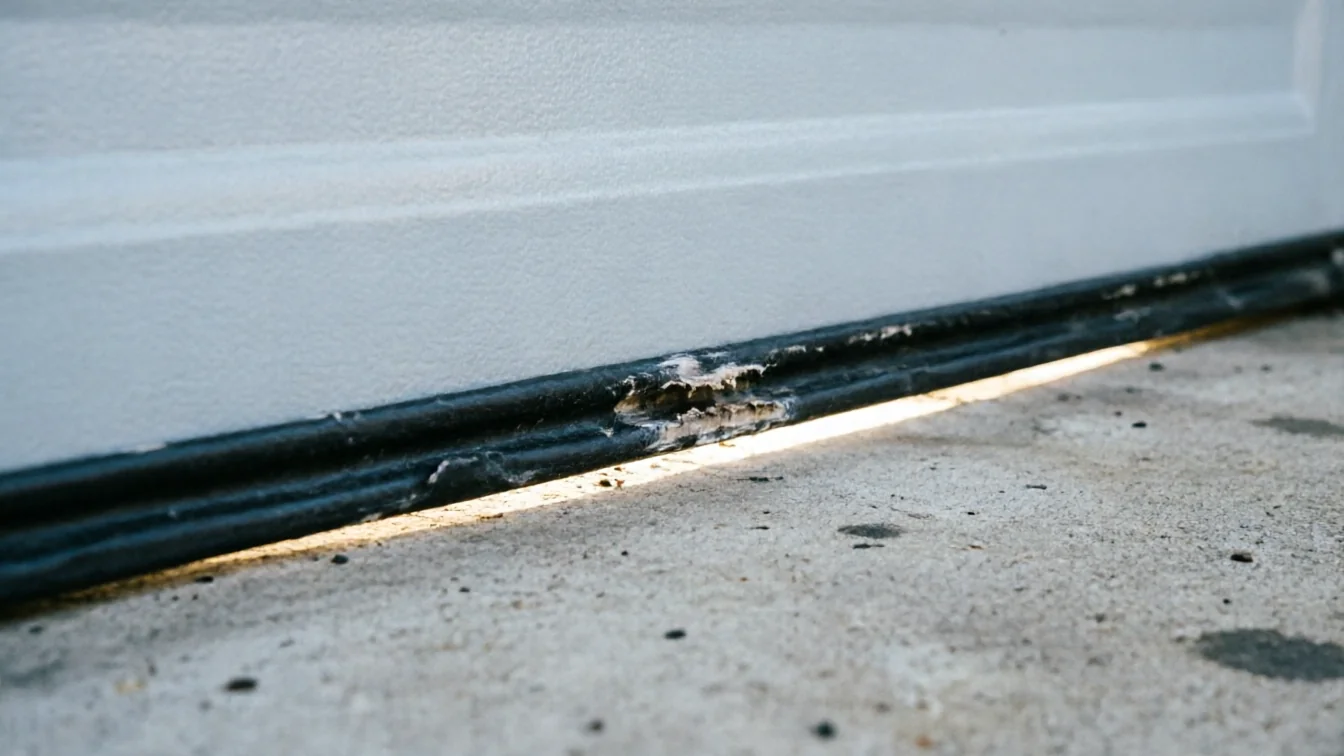
This area sits in a cold-severe climate band, and that matters more for a garage door than people expect. Rubber bottom seals and weatherstripping harden and crack faster here than they would somewhere milder, which is why that's one of the first things a tech looks at on an older door - a cracked seal lets cold air and moisture into the garage, and moisture is what rusts cable and corrodes spring coils from the inside.
Cold also changes how lubricant behaves. Grease that's fine in summer thickens in a cold garage, and a thickened lubricant makes the opener work harder to pull the door through its track - which, again, loads a motor that's already fighting an old spring. On houses built in the 1960s and 70s, which make up most of the stock in this area, the tracks themselves are often the lighter-gauge steel common to that era, and cold makes that steel more prone to bending if the door's rollers are even slightly out of alignment. None of this is dramatic on its own. It's just steady wear that cold weather speeds up, year after year, on hardware that was never built to last this long in the first place.
Talk to a local pro
Garage door trouble in Attleboro?
Same-day service with honest, upfront quotes.